
Define the job before the volume
A tank used for irrigation is sized differently from a detention system with a controlled outlet. Some projects need both. Write down whether the priority is water reuse, peak-flow control, compliance, resilience or a combination before comparing tank capacities.
Estimate collectable yield
The basic inputs are roof catchment area, rainfall over the chosen period and a runoff factor that allows for first flush, splash and system losses. Use local rainfall records and test more than an annual average. A system can show a healthy yearly total yet still empty during dry weeks or overflow repeatedly during wet periods.
A useful first-pass equation is: collectable volume (litres) = connected roof area (m²) × rainfall (mm) × runoff factor. One millimetre of rain over one square metre equals one litre before losses. This estimates inflow, not the final tank size.
- Measure only roof areas connected to the collection system.
- Separate cleaner roof catchments from unsuitable surfaces.
- Allow for first-flush diversion and filter losses.
- Model monthly or daily patterns for important projects.
Build a realistic demand profile
List each non-potable use and when it occurs. Landscape irrigation changes with season and planting maturity. Toilet flushing follows occupancy. Wash-down demand may be irregular. The useful storage volume is the part that can be filled and then consumed, not simply the largest tank that fits.
For example, a 500 m² connected roof receiving 100 mm of rain with a runoff factor of 0.8 produces an estimated 40,000 litres before first-flush and other project allowances. The tank should not automatically be sized to 40,000 litres. Demand, rainfall timing, overflow objectives and available footprint still need to be modelled.
| Input | Example | Why it matters |
|---|---|---|
| Connected roof area | 500 m² | Only include surfaces that discharge to the tank. |
| Rainfall event | 100 mm | Use a period and source suitable for the design question. |
| Runoff factor | 0.80 | Allows for catchment and collection losses at concept stage. |
| Estimated inflow | 40,000 L | Compare this with demand, overflow and drawdown, not tank size alone. |
Check constraints around the tank
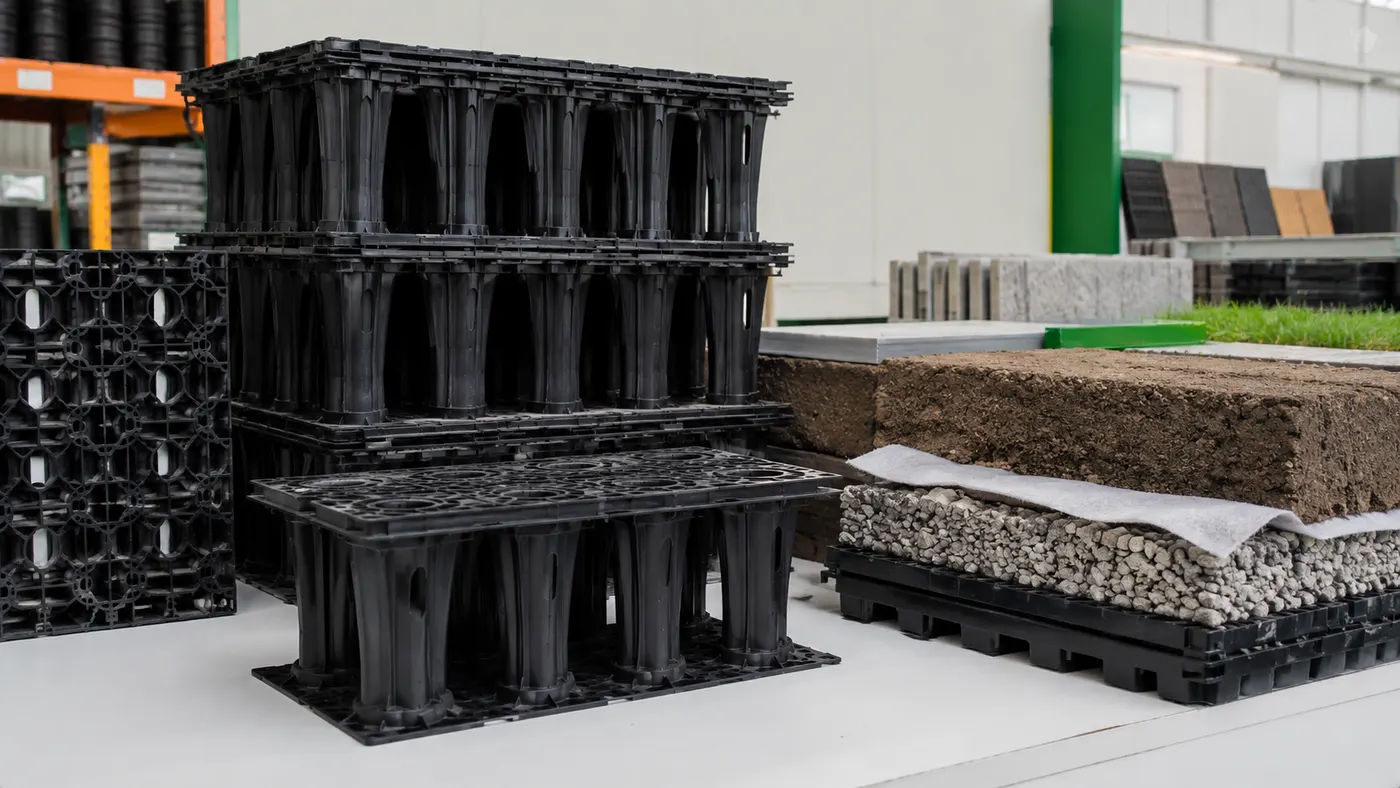
Buried modular systems need more than a clear footprint. The design must consider burial depth, groundwater, nearby foundations, traffic loading, inlet and overflow levels, access chambers, pump location and a route for future maintenance.
Issue a coordinated design brief
For product selection, provide the target working volume, plan dimensions, cover depth, loading, liner requirement, inlet and outlet levels and proposed end use. A hydraulic or civil engineer should complete the final sizing and statutory checks for the project.