Start below the greenery
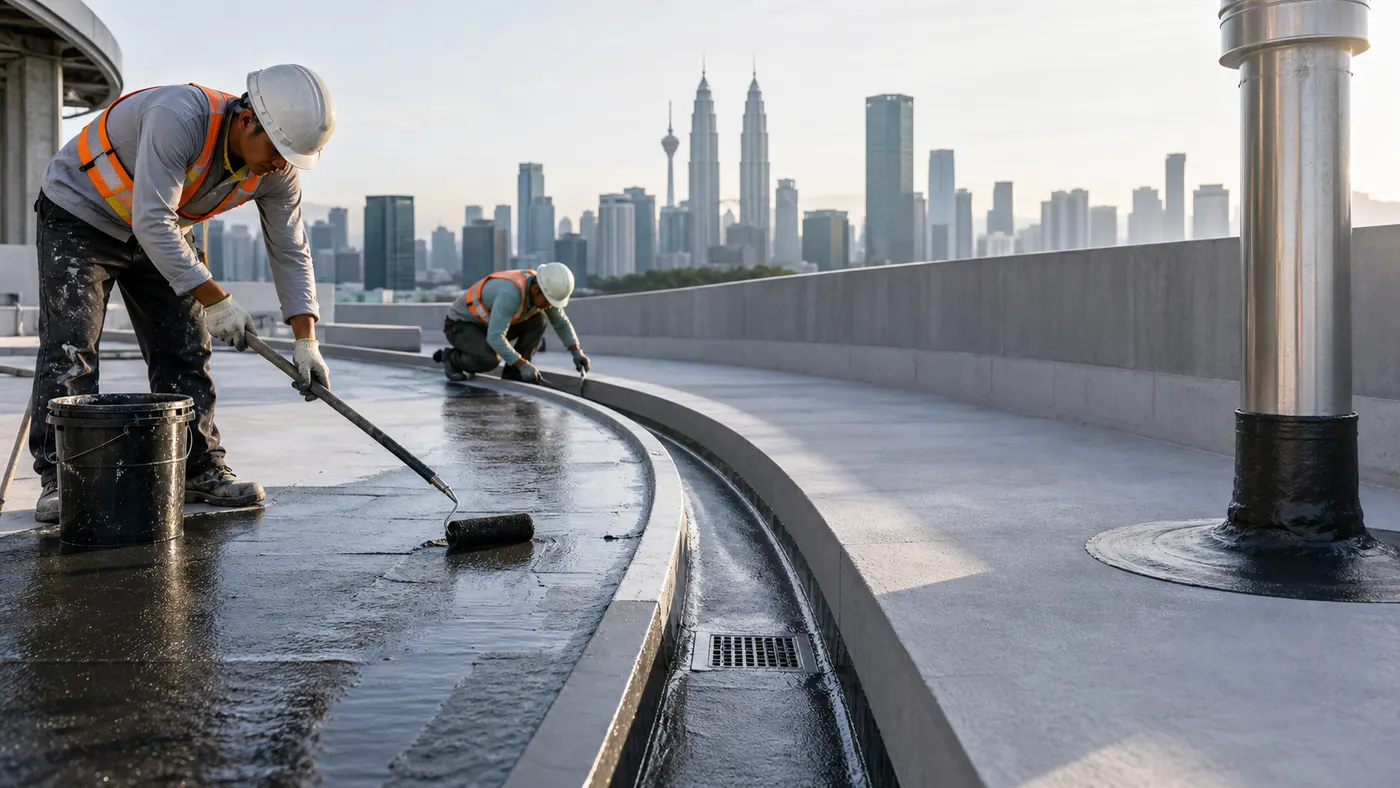
Most green roof problems are decided before any plants arrive. Falls, membrane termination, outlet positions and protection details set the conditions for every layer above. The landscape build-up should not be used to correct a roof that ponds unexpectedly or has inaccessible drainage points.
The section also needs to show real levels at doors, parapets, upstands and overflow routes. A neat typical detail is useful, but it cannot replace coordination at these edges.
Typical layer sequence
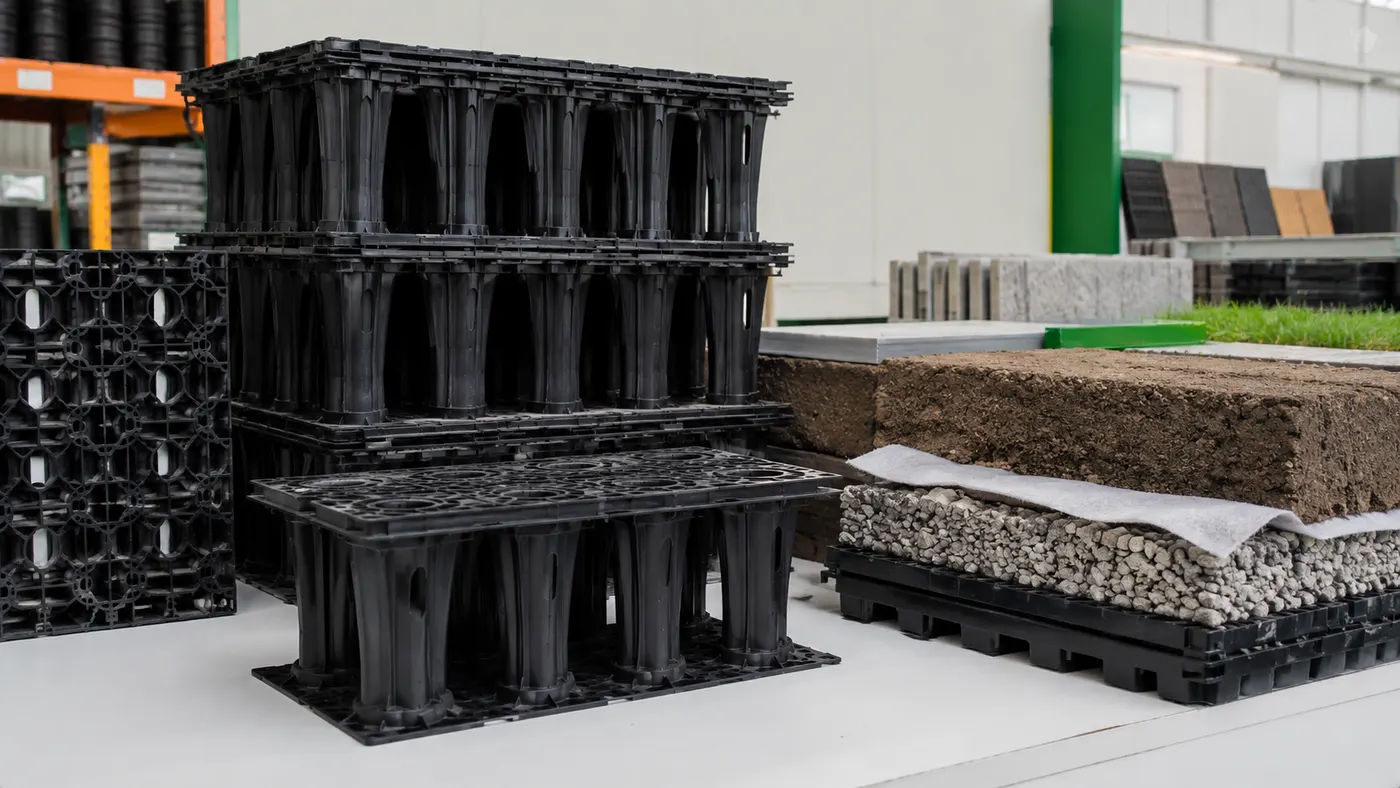
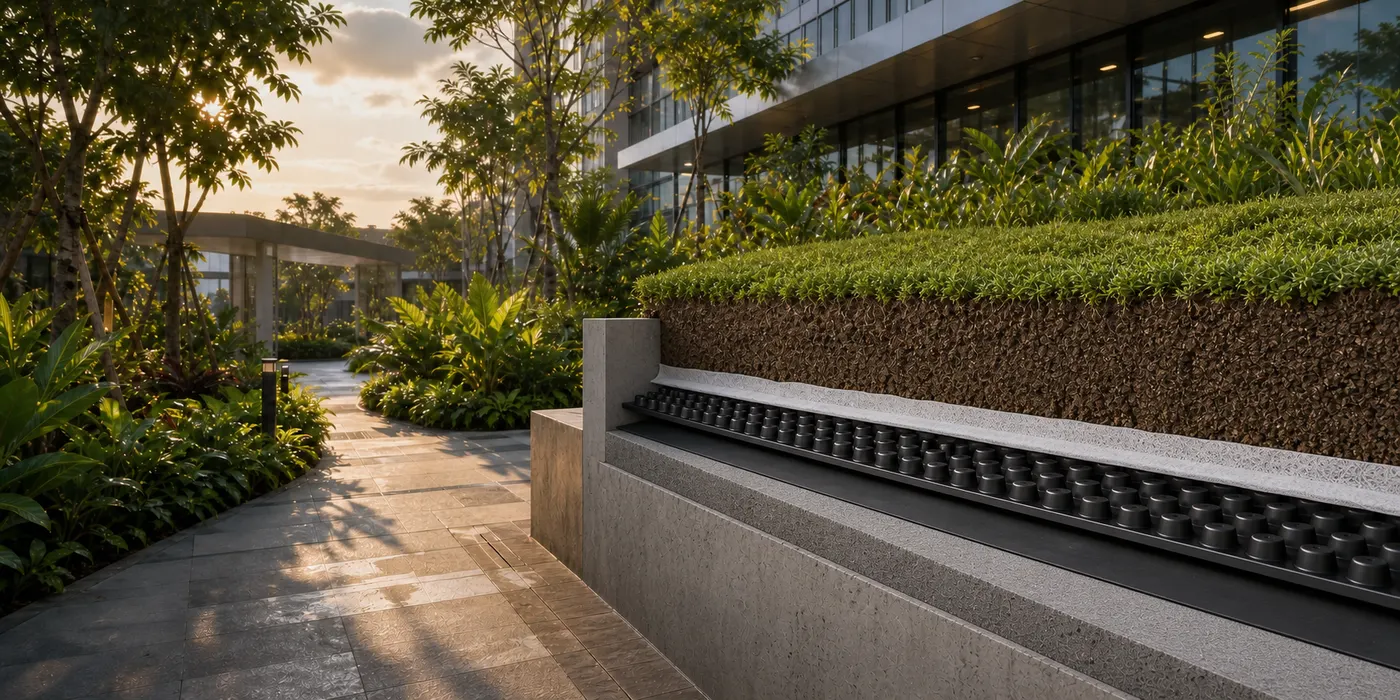
A common build-up runs from the structural deck to the waterproofing system, protection or root-management layer, drainage or retention layer, filter geotextile, growing media and planting. The exact order and product selection must follow the project specification and the membrane supplier's requirements.
- Structural roof deck with designed falls
- Waterproofing and tested terminations
- Protection and root-management layers where required
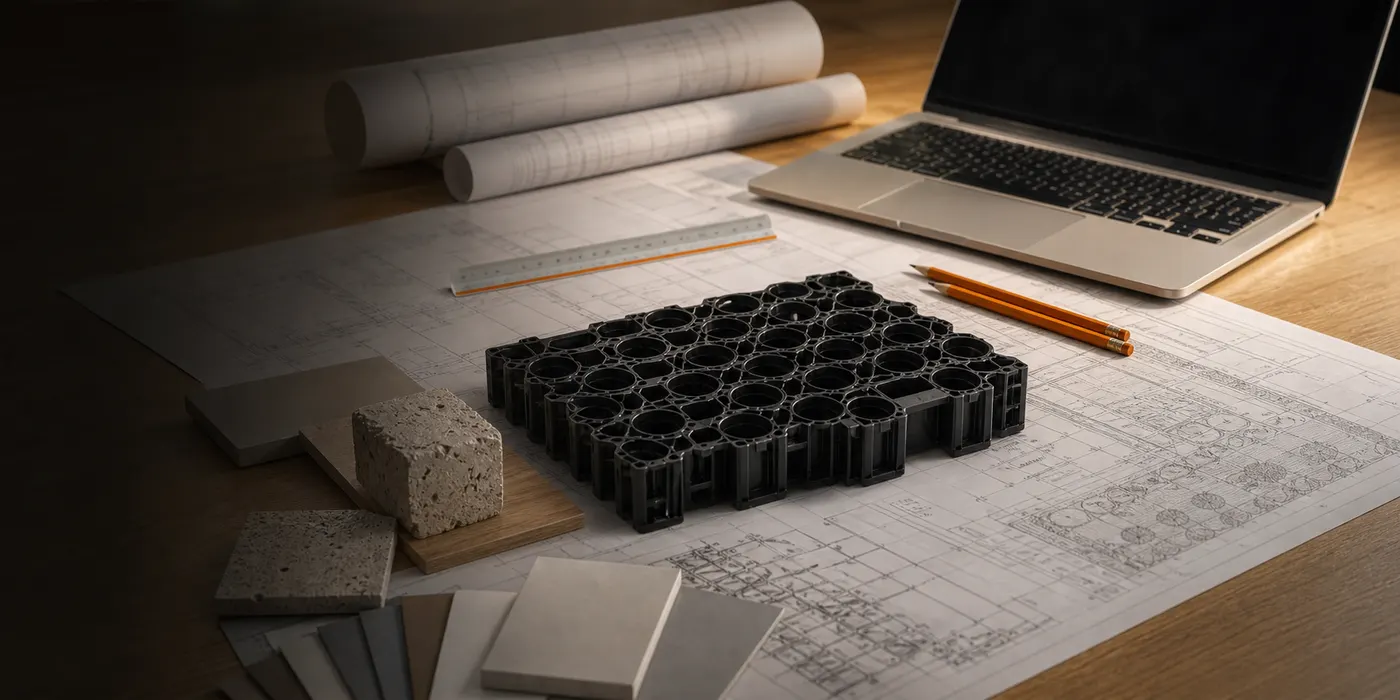
- VersiDrain or VersiCell drainage layer
- Filter geotextile with properly detailed laps
- Specified growing media and planting
| Layer | Design question | Coordination risk |
|---|---|---|
| Waterproofing | Is the membrane compatible with the proposed protection and root-management layers? | Terminations or outlets become inaccessible after landscaping. |
| Drainage or retention | Does the layer need rapid discharge, controlled retention or both? | A generic drainage layer is selected before the planting and stormwater brief is known. |
| Filter geotextile | Is the fabric suitable for the growing media and expected flow? | Poor laps allow fines to migrate into the drainage void. |
| Growing media | What is the saturated weight and settled depth? | Dry delivery weight is used for the structural check. |
| Planting and access | Can every outlet and planted zone be inspected safely? | Maintenance access is added after the layout is fixed. |
Drainage and water retention are different jobs
Drainage cells create a clear route for excess water. Retention panels hold a controlled amount of water within the build-up and release the rest. The project may need one function or a combination of both, depending on planting demand and stormwater objectives.
For Malaysian rainfall, the detail should keep discharge routes open during intense events. Retention volume is useful only when overflows, outlets and inspection zones still work as intended.
Check the saturated condition
Growing media, stored water and mature vegetation all add weight. Structural checks should use the saturated build-up rather than the dry delivery weight. The calculation should also include hardscape, edging, planters and maintenance access loads.
Information to include in the RFQ
A useful quotation request includes the roof area, section drawing, planting type, growing-media depth, outlet layout, design loading and expected programme. With those items, the supplier can respond to the actual build-up instead of pricing an isolated drainage layer.